Drone as First Responder (DFR) Program Guide
How DFR programs work, what technology and approvals they need, and the policy and community questions to answer first.
What DFR means
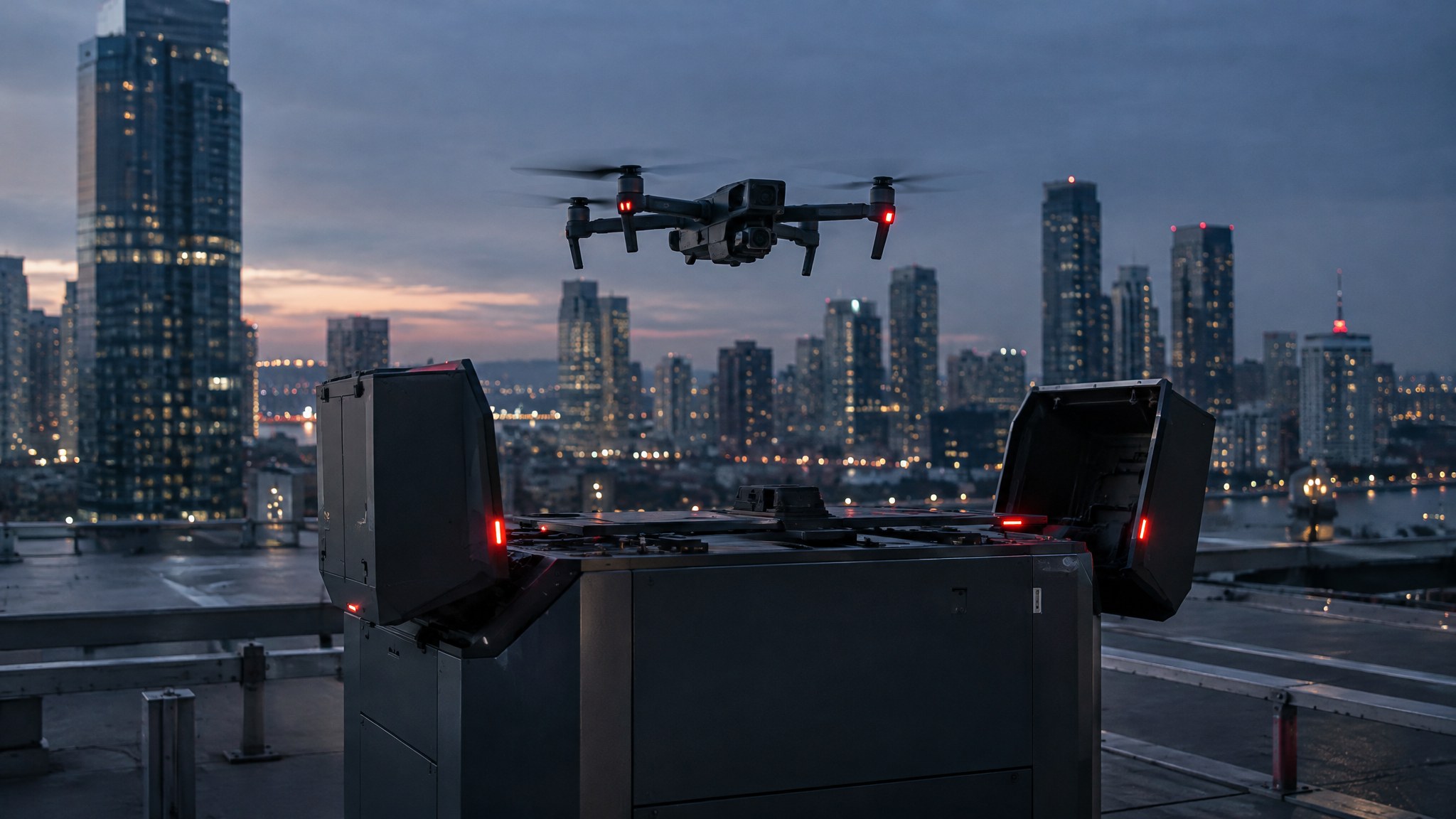
In a Drone as First Responder program, a drone launches — often from a rooftop dock — to a call for service and streams live video to dispatch and responding units before they arrive. The aim is better situational awareness: confirming whether a weapon is present, locating a suspect or missing person, or sizing up a fire. DFR vendors supply technology; agencies remain responsible for dispatch, operations and approvals.
Approvals and beyond-visual-line-of-sight
Most DFR flights travel beyond the remote pilot's visual line of sight, which needs FAA authorization — typically a COA or waiver with a detect-and-avoid strategy such as visual observers, ground-based radar or an approved system. Approvals are specific to the program, so budget time for the application and keep documentation current.
Technology stack
A DFR program typically combines docks or launch sites, aircraft with zoom and thermal cameras, connectivity (LTE/5G or private network), airspace awareness, a dispatch-integrated flight and streaming platform, and evidence-management integration. Ask vendors how each part works when connectivity drops.
Policy, privacy and transparency
Publish a clear policy covering permitted uses, prohibited uses, data retention, access control and public reporting before launch. Many agencies publish flight logs or transparency dashboards. Engage the community early — trust is easier to build than to rebuild.
Measuring success
Track response time to scene, calls resolved without dispatching officers, safety outcomes, flight hours, uptime and complaints. Review policy compliance regularly and publish the results.
Ready to compare providers?
Describe your project once and get quotes from suitable public safety drone providers.