Thermal Drone Operations: A Practical Guide for Responders
Understanding thermal cameras, radiometric data and the conditions that make or break a thermal mission.
How thermal works
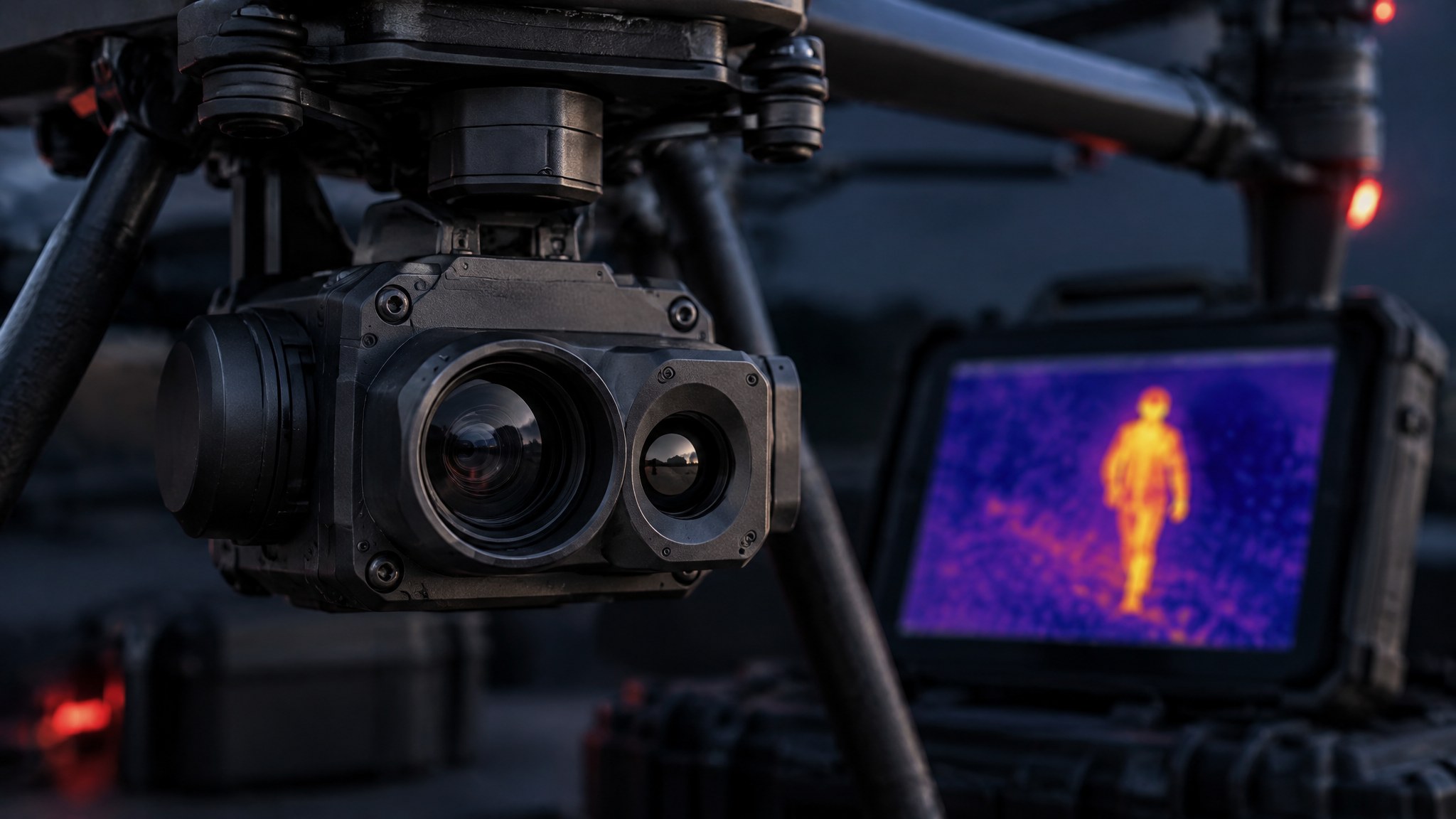
Thermal cameras detect emitted infrared energy and show temperature differences, not visible light. They see through smoke but not through glass, water or dense foliage. Resolution matters: a 640×512 sensor detects a person at a much greater distance than a 320×256 sensor.
Radiometric vs non-radiometric
Radiometric cameras record a temperature value for each pixel, so analysts can measure temperatures after the flight — valuable for fire hotspots and investigations. Non-radiometric cameras show relative contrast only.
Timing and conditions
Thermal contrast is best at night and early morning. Midday sun heats surfaces and creates false targets. Rain, fog and high humidity reduce range. Plan altitude and speed so targets cover enough pixels to be recognized.
Training matters
Interpreting thermal imagery is a skill. Look for training that covers palettes, gain settings, emissivity, reflections and search patterns, with practical night exercises.
Ready to compare providers?
Describe your project once and get quotes from suitable public safety drone providers.